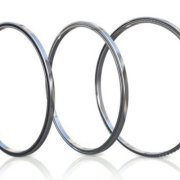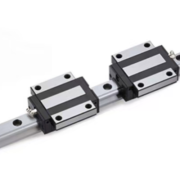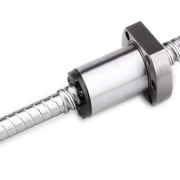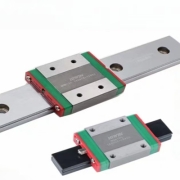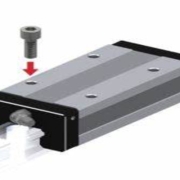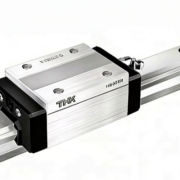
THK Supplier SHS LV Block

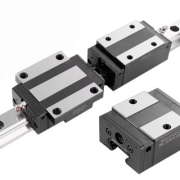
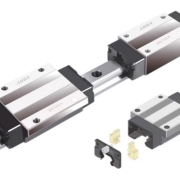
THK Linear guide

The fundamental innovation is the recirculating ball bearing system inside a guide block that moves along a precision-ground rail.

  • Rail: A hardened steel shaft with precision-ground raceways.

  • Slider (Block): The moving unit containing many load-carrying balls.

  • Recirculation: Balls roll through the load zone, then return via an end cap or internal path, creating a continuous, smooth rolling motion.

  • Gothic Arch Design: THK’s signature raceway groove shape provides four-point contact for each ball, enabling high load capacity in all directions (radial, reverse radial, and lateral).、

Main Product Lines (Series)

THK offers a vast range. Key series include:

  1. SHS Series (Standard Type): The most common and versatile. Offers high rigidity and accuracy. Used in machine tools, industrial robots, and general automation.

  2. SR Series (Miniature): Compact and lightweight. Ideal for precision instruments, medical devices, and small assembly machines where space is limited.

  3. SSR Series (Cross-Roller Type): Uses cylindrical rollers instead of balls. Provides extremely high rigidity and precision with minimal elastic deformation. Used in high-precision applications like measuring machines and semiconductor manufacturing.

  4. HSR Series (High-Speed Type): Designed for high-speed applications. Features improved ball recirculation, seals, and often a guide mechanism to prevent block lift-off at high speeds.

  5. LWR Series (Wide Type): Features a wider block for higher moment load capacity and stability, often used in large gantry systems and machining centers.

  6. C-Lube Series (Maintenance-Free): Equipped with a built-in lubricator that supplies grease automatically over a long period, significantly reducing maintenance.


Key Features & Advantages

  • High Precision & Smoothness: Enables precise positioning and repeatability down to micron levels.

  • High Load Capacity: The Gothic Arch design allows it to withstand heavy loads from multiple directions.

  • High Rigidity: Essential for maintaining accuracy under load and during cutting forces in machine tools.

  • Long Service Life: Made from high-quality bearing steel and hardened, offering excellent wear resistance.

  • Low Friction: Recirculating ball design results in a very low coefficient of friction, improving efficiency and reducing drive power requirements.

  • Interchangeability: Rails and blocks are standardized and interchangeable within the same series.


Typical Applications

THK guides are ubiquitous in industries requiring precise linear motion:

  • Machine Tools: CNC mills, lathes, grinders, EDM machines.

  • Semiconductor & Electronics Manufacturing: Wafer handlers, PCB drilling machines, wire bonders.

  • Industrial Robots: Articulated arms, linear axes, gantry robots.

  • Medical & Laboratory Equipment: MRI scanners, automated analyzers, surgical robots.

  • Automation Equipment: Pick-and-place units, linear actuators, assembly lines.

  • Precision Measuring Instruments: CMMs (Coordinate Measuring Machines), vision inspection systems.

linear shaft

Linear Shaft Introduction

A linear shaft is a crucial component in many mechanical systems, acting as a supporting element that enables linear motion in machinery and devices. These shafts are often cylindrical rods or bars made from materials with high strength, durability, and resistance to wear, such as steel or stainless steel. They are primarily designed to support rotational or linear movement, making them indispensable in various applications ranging from industrial machinery to robotics and precision instruments.

What is a Linear Shaft?
A linear shaft, also known as a guide shaft, is a mechanical component that serves as the axis along which a bearing or slider moves in a linear direction. In contrast to other types of shafts used in machinery, such as rotational shafts, a linear shaft’s primary function is to provide a stable track for components to move back and forth in a straight line. This motion can be either manually controlled or powered through motors or actuators.
In terms of design, a linear shaft is typically smooth and cylindrical, though the diameter and length may vary based on the specific application. Its surface is often hardened or precision-machined to ensure smooth operation and reduce friction between the shaft and the bearing components that slide along it.

Importance of Linear Shafts in Mechanical Systems
Linear shafts are vital in systems that require precise movement along a single axis. They are commonly used in conjunction with linear bearings or linear guides to ensure smooth, frictionless motion. This setup is integral to the design of machines like CNC (Computer Numerical Control) machines, 3D printers, and robotics, where precise, repeatable movements are essential for accurate performance.
One of the primary benefits of using linear shafts is the ability to achieve high precision. By ensuring that all moving parts are constrained to a single line of motion, linear shafts minimize errors caused by misalignment or irregular movements. Additionally, these shafts are often designed to handle heavy loads, providing support for substantial forces while maintaining smooth and consistent movement.

Applications of Linear Shafts
Linear shafts have a broad range of applications across various industries. In manufacturing and automation, they are frequently used in CNC machines, where they guide the cutting tools with pinpoint accuracy. Similarly, robotic arms use linear shafts to ensure that their joints or end-effectors can move with the required precision, particularly in tasks like assembly, inspection, or handling delicate materials.
In medical devices, linear shafts are often employed in equipment like infusion pumps, where the motion of critical components needs to be both smooth and accurate. Similarly, in optical instruments, such as microscopes or telescopes, linear shafts help guide components such as lenses or mirrors along the required axis, enabling precise adjustments.

Types of Linear Shafts
There are several types of linear shafts, each designed for specific purposes:

Standard Linear Shafts: These are basic shafts that provide smooth, unrestricted motion. They are typically used in applications where the movement is straightforward and the load is relatively light.

Precision Linear Shafts: These shafts are manufactured to very tight tolerances and are used in high-precision applications. The surface finish is often enhanced to reduce friction and wear.

Hardened Linear Shafts: These shafts are heat-treated to achieve higher hardness, making them ideal for applications that involve higher stress or wear, such as in heavy machinery or industrial equipment.

Non-rotational Linear Shafts: These shafts are specifically designed to guide motion in one direction without rotation. They are commonly used in systems that require linear travel, such as sliding doors, linear actuators, or material handling systems.

Maintenance and Durability
Like any mechanical component, linear shafts require regular maintenance to ensure optimal performance. The most common issues encountered include wear and tear from friction, as well as corrosion from exposure to moisture or chemicals. To address these problems, many linear shafts are coated with lubricants or treated with anti-corrosive materials. Regular cleaning and inspection can help extend the life of these components and ensure that they continue to operate smoothly.
Xi’an Areswin Precision Machinery Company is leading sell the of linear shaft, material is carton steel and high precision. We can machining the shaft base on clients need. Please contact us for more information: https://www.aresmotion.com/product/linear-shaft/

Conclusion
The linear shaft is a fundamental component in modern mechanical systems, providing stability, precision, and support for linear motion. From industrial machines to robotics and medical devices, linear shafts are essential for ensuring smooth, controlled movement in a variety of applications. With the right design, material, and maintenance, these shafts can offer excellent performance and durability, making them indispensable in a wide range of industries.

robot bearing kc200cp0

The Application and Maintenance of Thin Section Bearings in Robot Arm

Introduction

Robot arms are marvels of modern engineering, requiring a combination of precision, speed, load capacity, and reliability. At the heart of their articulate movement lie the joints, and within these joints, bearings are the unsung heroes. Among the various types of bearings used, Deep Groove Ball Bearings (DGBBs), particularly the “thin-section” or “equal-section” variants, play a critical role. This article explores their application in robot arm joints and outlines key maintenance and repair procedures.

Part 1: Application in Robot Arm Joints

Equal Cross-Section Deep Groove Ball Bearings are characterized by their simple design, consisting of an inner ring, an outer ring, a set of steel balls, and a cage. The “deep groove” allows them to handle significant radial and axial loads from both directions.

Why are they ideal for robot arms?

  1. High Precision and Low Friction: DGBBs are manufactured to extremely tight tolerances (e.g., ABEC 5, 7, or 9). This ensures minimal runout and smooth, predictable rotation, which is directly translated into the robot’s positional accuracy and repeatability. Their low friction minimizes energy loss and heat generation.

  2. Compactness and Space Saving: In robot joints, especially those near the end-effector, space is at a premium. Thin-section DGBBs offer a high load capacity relative to their cross-section, allowing designers to create more compact and lightweight joint assemblies without sacrificing strength.

  3. Versatile Load Handling: Robot arm joints experience complex loads. While primarily supporting radial loads from the arm’s weight and payload, they also encounter axial loads during acceleration, deceleration, and changes in direction. DGBBs are uniquely suited to handle this combination of forces effectively.

  4. High-Speed Capability: With proper lubrication and a precision cage, DGBBs can operate at very high speeds. This is essential for robots in applications like pick-and-place, assembly, and packaging, where cycle times are critical.

  5. Low Noise and Vibration: The smooth operation of DGBBs contributes to the quiet and stable performance of the robot arm, which is crucial in sensitive environments like medical and laboratory automation.

Common Joint Applications:

  • Base and Shoulder Joints: Handling high radial loads from the weight of the entire arm.

  • Elbow and Wrist Joints: Managing combined radial and axial loads while enabling precise articulation.

  • Gripper Rotation Mechanisms: Providing smooth and precise rotation for the end-effector.

Part 2: Maintenance and Repair

Despite their robustness, DGBBs in robot arms are subject to wear and tear. Proactive maintenance is key to maximizing their service life and preventing catastrophic failure.

A. Signs of Bearing Failure

  • Increased Vibration and Noise: A clear indicator of raceway or ball damage (pitting, spalling).

  • Rise in Operating Temperature: Often caused by inadequate lubrication, overloading, or excessive preload.

  • Reduced Positioning Accuracy: Play or backlash in the bearing directly affects the robot’s repeatability.

  • Audible Grinding or Crunching Sounds: Sign of severe contamination or lubrication failure.

  • Increased Torque: The joint motor requires more current to move, indicating high friction.

B. Maintenance Procedures

  1. Regular Inspection:

    • Visual Checks: Look for signs of lubricant leakage or contamination.

    • Vibration Analysis: Use sensors to monitor vibration levels and detect early signs of degradation.

    • Thermal Monitoring: Use thermal cameras or sensors to identify joints running hotter than normal.

  2. Lubrication:

    • Type: Use the manufacturer-recommended grease or oil. Common types include synthetic lithium-based greases or PFPE-based greases for high-temperature or cleanroom applications.

    • Interval: Follow the robot manufacturer’s guidelines. The relubrication interval depends on operating speed, temperature, and load.

    • Quantity: Avoid over-greasing, as it can lead to churning and overheating.

C. Repair and Replacement Procedure

Replacing a bearing in a robot arm joint is a precision task that should ideally be performed by trained technicians.

Step-by-Step Guide:

  1. Safety First: Power down and lock out the robot. Isolate it from all energy sources (electrical, pneumatic, hydraulic).

  2. Disassembly:

    • Remove the end-effector and any covers or housings to access the faulty joint.

    • Carefully disengage the motor and any harmonic drive or gearbox connected to the joint.

    • Use appropriate pullers to remove the bearing from its housing. Avoid hammering or applying force to the bearing rings, as this can damage the joint housing and shaft.

  3. Cleaning and Inspection:

    • Thoroughly clean the housing, shaft, and surrounding components.

    • Inspect the shaft and housing for wear, scoring, or corrosion. These must be in perfect condition for the new bearing to function correctly.

  4. Bearing Replacement:

    • Handle with Care: New bearings are precision components. Wear gloves to prevent corrosion from skin contact.

    • Preparation: If specified, pre-lubricate the new bearing.

    • Installation: Use a dedicated bearing fitting tool or a suitably sized tube to press the bearing onto the shaft and into the housing. Apply force only on the ring with the tight fit (usually the inner ring for a shaft fit, the outer ring for a housing fit).

    • Alignment: Ensure the bearing is seated square and fully.

  5. Reassembly:

    • Reassemble the joint in the reverse order of disassembly. Ensure all seals, spacers, and locking mechanisms are correctly installed.

    • Apply the correct preload to the bearing as specified in the technical manual. Incorrect preload is a common cause of premature failure.

  6. Testing and Calibration:

    • After reassembly, power up the system and run the joint slowly through its range of motion.

    • Listen for unusual noises and monitor current draw.

    • Crucially, the robot must undergo a full recalibration to restore its accuracy, as the mechanical center of the joint may have shifted.

Conclusion

Thin Section Deep Groove Ball Bearings are a fundamental and highly effective solution for the demanding requirements of robot arm joints. Their precision, compactness, and versatility make them a top choice for engineers. However, their performance and longevity are heavily dependent on a disciplined approach to maintenance and a careful, precise methodology for repair and replacement. By understanding both their application and upkeep, operators can ensure their robotic systems achieve maximum uptime, accuracy, and service life.

We provide the inner diameter dimension of robot deep groove ball bearings in 8mm-260 series, and the specific models are as follows:
K02508CP0 K05008CP0 K06008CP0 K07008CP0 K08008CP0 K09008CP0 K10008CP0 K11008CP0 K12008CP0 K13008CP0 K14008CP0 K15008CP0 K16008CP0 K17008CP0 K18008CP0 K19008CP0 K20008CP0 K25008CP0 K30008CP0 K32008CP0 K34008CP0 K36008CP0

If necessary, please feel free to contact us for the catalogue.

THK linear guide Supplier

5 Advantages of THK LM Linear Guide and THK Supplier

THK LM Linear Guide (Linear Motion Guide) represent a foundational advancement in precision motion control technology. Developed in 1972 by Japan THK Corporation, these guides revolutionized mechanical systems by replacing traditional sliding friction with rolling friction, reducing resistance to approximately 1/50 of conventional methods . This innovation enabled unprecedented levels of speed, accuracy, and energy efficiency in industrial applications, contributing significantly to automation across sectors such as manufacturing, robotics, and semiconductor production.

The THK LM Linear Guide have below Advantages:

1. Exceptional Load Capacity and Rigidity
THK LM Guides utilize a unique 4-row circular arc groove design with optimized contact angles (typically 45°), enabling equal load distribution across radial, reverse radial, and lateral directions. This configuration allows each steel ball to handle 13 times higher loads than conventional planar contact systems. Consequently, systems achieve 2,200x longer service life under equivalent conditions . The rigid DF (Dual-Face) structure further enhances moment load resistance, critical for heavy CNC machining and gantry systems where deflection compromises accuracy.

2. Precision Averaging Effect and Simplified Installation
A breakthrough innovation is the precision averaging effect, which compensates for mounting surface imperfections (e.g., flatness or parallelism errors). Through multi-axis constrained rail configurations, LM Guides absorb misalignments and maintain sub-micron motion accuracy even on suboptimal surfaces. This reduces machining costs for base components by up to 40% and slashes installation labor/time by minimizing alignment adjustments .

3. Maintenance-Free Longevity and Environmental Resilience
The retainer technology eliminates metal-to-metal contact between balls, reducing friction, heat generation, and lubricant dispersal. This extends service life by 200–300% while enabling long-term lubrication-free operation. Options like stainless steel rails (M1/M2 series) withstand corrosive or high-temperature environments (up to 150°C), while ceramic variants serve non-magnetic applications like MRI machines . Dust-resistant seals (e.g., LaCS scrapers) and solid-film lubricants (“S-Film”) ensure reliability in semiconductor clean rooms or food processing .

4.Smooth Operation with Low Noise and Vibration
Ball retainers prevent collision between rolling elements, reducing operational noise to <50 dB at 100 m/s and minimizing vibration. The DF (Dual-Face) structure absorbs installation misalignments, ensuring micron-level precision and smooth motion even under preload—critical for precision grinding or optical alignment systems.

5.Environmental Adaptability and Customization
– Corrosion resistance: Stainless-steel variants (M1/M2) withstand temperatures up to 150°C and harsh environments like chemical processing or cleanrooms.
– Space/weight optimization**: Models like SSR use resin inserts to reduce weight by 40%, while low-profile designs (e.g., SRS) fit compact automation cells.

THK LM Guides have Below Key Model series :
Global Standard size Model SHS
Radial Type Model SSR
Ultra-heavy load (radial type) Model SVR
Ultra-heavy load (4-way) Model SVS
Wide Rail Model SHW
Miniature Model SRS
Miniature Model SRS-G
Ultra-high Rigidity (Wide) Model SRW
Ultra-high Rigidity (Low center of gravity) Model SRN
Ultra-high Rigidity Model SRG
Global Standard size Model HSR
4-Way Equal Load Roller-Type LM Guide Model HDR
Radial Type Model SR
Separate (Four-way equal load) Model HR
Separate (radial type) Model GSR
R Guide Model HCRStraight-Curved Guide Model HMG
LM Guide highly corrosion resistant stainless steel type

Areswin Precison Machinery Company supply THK all kinds of lienar guides As a THK supplier in China, Areswin can supply the THK linear guides products worldwide with fast delivery time.
If you need please contact us, we will give you a good feedback.  https://www.aresmotion.com/contact-us/

Conclusion
THK LM Linear Guides exemplify engineering ingenuity, transforming linear motion into a cornerstone of modern automation. By balancing ultra-high rigidity with microscopic precision and environmental adaptability, they remain critical to advancing technology in fields as diverse as nanotechnology, renewable energy, and biomedical engineering. As THK continues refining core technologies like retainers and material science, these systems will further enable machines to push performance boundaries while conserving energy and maintenance resources worldwide.


STAF linear guide supplier

How to select a Linear guide? STAF Linear Guide will be the best one


Founded in Taiwan in 1987, STAF Linear Motion Technology has established itself as a globally recognized manufacturer of high-performance linear motion components. Serving industries from semiconductor manufacturing to medical robotics, STAF linear guides provide the foundational precision for advanced automation systems where reliability and accuracy are non-negotiable .

Core Technological Innovations

1. Four-Row Pearl Design with Self-Alignment
STAF’s signature innovation lies in its four-row pearl configuration, where steel balls contact the rail and block at 45° angles across four points. This X-type geometry enables uniform load distribution in all directions—vertically, horizontally, and diagonally. Unlike conventional two-row Gothic-arch designs, this structure offers 30–40% higher rigidity, greater shock resistance, and compensates for mounting surface deviations up to 0.3 mm through automatic self-alignment . The result is consistent precision even in imperfect installations.

2. Ultra-Low Friction & Energy Efficiency
With a theoretical friction coefficient of just 0.003 (practical range: 0.02–0.05), STAF guides reduce resistance to 1/50th of traditional sliding mechanisms . This minimizes drive-power requirements, cuts energy consumption by up to 40%, and suppresses heat generation—enabling both high-speed operation (exceeding 100 m/min in BGC series) and extended component life .

3. Advanced Noise and Lubrication Management
STAF integrates polymer circulation components like silent sleeves (BGX series) and chain belts (BGC series) to replace metal ball paths. These dampen vibration and lower operational noise by 15–20 dB compared to conventional guides. The polymer surfaces also enhance oil retention, improving lubrication distribution and reducing wear-induced maintenance .

4. Extreme Environment Durability
STAF guides feature full-range sealing systems with triple-layer lip seals (top, bottom, and ends) to block contaminants like dust, coolant, and metal chips. Options include High Dust Proof (HDP) for factories and Low Dust Proof (LDP) for cleanrooms . Combined with stainless-steel components and heat-treated rails, this ensures stable performance in temperatures up to 150°C and corrosive environments .

Versatility Across Applications
STAF’s modular ecosystem supports diverse industrial needs:
– High-Speed Models: BGC chain-belt series for CNC spindles and robotics .
– Micro Guides: MBX15WN and BGXS series for compact medical devices .
– Heavy-Duty Options: Preloaded SHS/SGS series for machining centers .
– Specialized Variants: High-temperature, corrosion-resistant, and self-lubricating designs .

Cost and Supply Chain Advantages
STAF delivers 30–40% higher cost efficiency than premium European/Japanese brands without compromising quality . Its interchangeable rails/blocks (compatible with HIWIN standards) simplify repairs and upgrades, while a global logistics network ensures 48-hour delivery for standard components .

Why Choose STAF?

STAF has successfully established itself as a reliable source for high-performance linear motion solutions. Their commitment to manufacturing quality, precision engineering, and robust design, combined with effective sealing and competitive pricing, makes STAF linear guides a compelling choice for engineers and machine builders worldwide. Whether for upgrading existing machinery or designing the next generation of automation, STAF offers the precision, durability, and reliability needed to ensure smooth and accurate linear motion, forming the silent backbone of countless industrial processes. Their extensive global distribution network further ensures supply all type spare parts and after sell service.

Areswin Precision Machinery Company can supply original STAF linear guide products with good price. We can supply BGC Caged Linear Guides,MBC Cage type Linear guides series,MBX Non Cage type Linear Guide,BGX Conventional Linear Guides,BGXW Wide Rail Linear Guides.

Please contact here for more information:
STAF Linear Guideways Suppliers & Manufacturers China-Aresmotion

TBI ball screw

5 Advantages of TBI Ball Screw

TBI ball screw, renowned for their exceptional performance in precision motion control systems. TBI ball screws are widely utilized across industries such as CNC machinery, robotics, aerospace, and automotive manufacturing, offering distinct advantages in design, reliability, and adaptability.

1. High Precision and Repeatability
TBI ball screws excel in converting rotational motion into linear motion with minimal friction, ensuring smooth operation and micrometer-level accuracy. This precision is critical for applications like CNC machining, where even minor deviations can compromise product quality. The screws undergo rigorous manufacturing processes, including precision grinding and heat treatment, to meet international standards such as ISO and JIS . For instance, imported TBI ball screws are noted for their ability to maintain high-speed performance without sacrificing accuracy, a feature highlighted in precision-driven sectors .

2. Enhanced Durability and Load Capacity
Constructed from high-grade alloy steel and subjected to advanced heat treatments, TBI ball screws exhibit superior wear resistance and longevity. Their design minimizes stress concentrations, particularly in critical areas like screw shoulders, which are engineered to avoid sharp angles that could lead to fractures . Additionally, the use of chromium-molybdenum steel balls ensures resilience under high temperatures and repetitive stress, reducing the risk of premature failure .

3. Customization and Versatility
TBI offers a diverse range of configurations, including rolled and ground ball screws, catering to both cost-sensitive and high-precision applications. Rolled screws provide economical solutions for general industrial use, while ground variants deliver ultra-tight tolerances for specialized machinery . The brand also supports customization in lead, diameter, and nut design, enabling engineers to tailor solutions for specific operational demands .

4. Advanced Preload Technology
To minimize backlash and enhance rigidity, TBI incorporates preload mechanisms such as oversized balls or double-nut systems. These methods reduce axial play, ensuring consistent performance during directional changes—a critical feature for robotics and automation systems. Preload adjustments also improve nut rigidity, which is vital for maintaining alignment under heavy loads .

5. Global Reliability and Support
With a presence in over 90 countries, TBI combines quality with accessibility. Their commitment to R&D ensures continuous innovation, such as adapting designs for emerging applications like Tesla’s humanoid robots, which demand compact, high-efficiency components . Furthermore, TBI’s extensive production capacity (up to 50,000 units monthly) guarantees timely delivery.

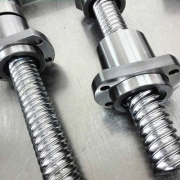
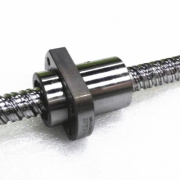
Areswin Precision Machinery Company is a reliable supplier can supply the original TBI ball screw,with good price and fast delivery time.The company can machining the screw base on clients drawing and requirement. The company supply the worldwide. Please click here for more information: TBI Precision Ball Screw SFU Ground and Rolled Series | SFU Ball Screw

HIWN HG series

HIWIN HG series linear guide introduction

The HIWIN HG series linear guide is a highly versatile and reliable motion solution designed to meet the demands of precision-driven industries such as CNC machining, automation, robotics, and semiconductor manufacturing. Known for its robust construction, high accuracy, and smooth operation, the HG series has become a benchmark for linear motion systems worldwide.

Innovative Design
At the heart of the HG series linear guide is its innovative design, which incorporates four rows of recirculating ball bearings. This configuration ensures even load distribution, high rigidity, and smooth linear motion, making it suitable for applications requiring both high precision and heavy load capacity. The HG series is available in a wide range of sizes, from compact models like the HG15 to larger variants like the HG55, allowing it to cater to diverse industrial needs.

High Precision
Precision is a hallmark of the HG type linear guide. The sliding surfaces are meticulously ground to achieve a surface roughness of Ra 0.1 μm, ensuring minimal friction and smooth operation. Additionally, the guide rails undergo high-precision heat treatment processes, such as quenching and nitriding, to enhance surface hardness (up to 58–62 HRC) and wear resistance. This combination of precision engineering and durable materials ensures long-term performance and reliability, even in harsh operating conditions.

Easy Installation and Maintenance
The HG series is designed for ease of installation and maintenance. Its modular structure allows for quick assembly and integration into multi-axis systems, while the inclusion of lubrication grooves and optional lubrication units ensures consistent performance with minimal maintenance. The pre-loaded ball bearings in the HG type linear guide eliminate backlash, providing high repeatability and accuracy, which are critical for applications such as CNC machining and precision assembly.

International Standards
HIWIN’s commitment to quality is evident in the HG series’ adherence to international standards, including ISO 9001 and ISO 14001. Rigorous quality control processes, supported by advanced measuring equipment like coordinate measuring machines (CMMs), ensure that every HG type linear guide meets the highest standards of precision and reliability.

Reliable Supplier
Areswin Precision Machinery Company is a reliable supplier can supply the original HIWIN linear guide,with good price and fast delivery time. The company supply the worldwide. Please contact us for more information:Contact Us – ARESWIN

In summary, the HIWIN HG type linear guide is a high-performance motion solution that combines precision, durability, and versatility. Its advanced design, robust construction, and ease of use make it an ideal choice for industries seeking reliable and accurate linear motion systems.

SGR linear guide

SGR and SGB Linear Guide Introduction

The SGR Linear Guide is a highly advanced motion control component that plays a pivotal role in modern manufacturing and automation systems. Renowned for its precision, durability, and smooth operation, the SGR Linear Guide is engineered to facilitate linear motion in a variety of applications, from robotics to CNC machinery. SGR linear guide also widely used in woodworking, furniture and fishery area. Its design incorporates state-of-the-art materials and innovative engineering, which together ensure optimum performance and minimal friction during operation.


One of the key benefits of the SGR Linear Guide is its high load-bearing capacity, enabling it to handle substantial weights while maintaining accuracy in motion. This makes it an ideal choice for both light and heavy-duty applications, ensuring reliability under demanding conditions. The construction of the guide minimizes wear, which not only extends its lifespan but also reduces the need for frequent maintenance, thus lowering operational costs.


Moreover, the versatility of the SGR Linear Guide is evident in its adaptability to various project specifications. It is available in multiple sizes and load ratings, allowing engineers and technicians to select the model that best suits their specific needs. Its streamlined installation process contributes to quicker project timelines, making it a preferred choice among professionals in the field.


The SGR linear guide use together with the block SGB block, the block have 3 wheels, 4 wheels,6 wheels. More wheels make the block,Increasing the number of wheels increase the bearing capacity of linear guide.


The models include:SGR10,SGB10,SGR15,SGB15,SGR20,SGB20,SGR25,SGB25,SGR35,SGB35

SGR rail and SGB blocks have silver color and black color two types, the use can choose base on their need and the size is same.


Areswin Precision Machinery Company is manufacture of SGR and SGB linear guide, can supply all SGB and SGR linear guide with goods quality and cheaper price.

Please click here for more detail of SGR linear guide:SGR SGB Linear motion slide units| Linear motion slide unit | linear slide

full ceramic bearings supplier

Full Ceramic Bearings Selection Guide

How to choose a ceramic bearings
Ceramic bearing supplier
Ceramic bearings have the characteristics of high temperature resistance, cold resistance, wear resistance, corrosion resistance, anti-magnetic and electrical insulation, oil-free self-lubrication, and high speed. Full ceramic bearings can be used in extremely harsh environments and special working conditions. Ceramic bearings can be widely used in aviation, aerospace, navigation, petroleum, chemical industry, automobile, metallurgy, electricity, textile, pumps, medical equipment, scientific research and national defense and military fields. Ceramic bearings are high-tech products for the application of new materials.The ceramic bearings produced by ARESWIN are zirconium oxide (ZrO2), silicon nitride (SI3N4), and silicon carbide (SIC). The retainer is made of PTFE, PEEK, SUS304 and ceramic retainer materials.

According to the type of use scenario, it can be divided into the following categories:

1. High temperature resistant ceramic bearings:

The material itself has a high temperature resistance of 1200℃ and good self-lubrication. It can be used in high-temperature equipment such as plastic and steel making;

2. Corrosion-resistant ceramic bearings:

The material itself has corrosion resistance and can be used in strong acid, strong alkali, organic salt, seawater and other fields such as: semiconductor equipment, food machinery and equipment, electroplating equipment, chemical equipment, textile machinery, medical machinery, shipbuilding, etc.

3. Anti-magnetic ceramic bearings:

The non-magnetic and does not absorb dust, it can reduce premature peeling and noise of bearings. This type ceramic bearings can be used in demagnetization equipment. Precision instruments and other fields.

4. Electrically insulated ceramic bearings:

Due to its high resistance, it can avoid arc damage to bearings and can be used in various power equipment requiring insulation.

According to different materials, the ceramic bearings produced by ARESWIN can be classified as follows.

1. Zirconia full ceramic bearings
Zirconium oxide ceramic bearings have a series of characteristics such as high temperature resistance, low cold resistance, high pressure resistance, corrosion resistance, acid and alkali resistance, anti-magnetic electrical insulation, oil-free self-lubrication, etc., which are suitable for working in special environments where hybrid ceramic ball bearings and steel bearings cannot adapt.

2. Silicon nitride full ceramic bearings
Silicon nitride full ceramic bearings have all the characteristics of zirconium oxide, and also have their own light specific gravity, good wear resistance, and high hardness. Compared with zirconium oxide ceramic bearings, full ceramic bearings made of silicon nitride are more suitable for high speed and load capacity, and are more resistant to high temperatures. At the same time, they have good high temperature strength, mechanical oxidation resistance, high temperature load capacity and good resistance to strong acid and strong alkali corrosive gases.

3. Full ball full ceramic bearings
The full ball type full ceramic bearing adopts a cage-free structure design. The bearing is designed with a ball addition port on one side to facilitate the loading of more ceramic balls, thereby increasing its load capacity. This design is to avoid the limitation of the cage material and improve the corrosion resistance and temperature resistance of the bearing. This series of bearings is not suitable for higher speeds.
4. Hybrid ceramic bearings
Hybrid ceramic bearings refer to rolling bearings in which the rings and rolling bodies are made of different materials. In most cases, the rings of hybrid ceramic bearings are made of bearing steel, whereas the rolling bodies are made of high-performance ceramics, such as silicon nitride (Si3N4).

hybrid ceramic bearing

Areswin Precision Machinery Company can supply all kinds of Ceramic bearings, Hybrid Ceramic bearings. Please check our website for more information:Ceramic Ball Bearings Ceramic Ball Bearings supplier in china (aresmotion.com)

When choosing a ceramic bearing,please tell us the using condition, and we will select the most suitable ceramic bearing for you. Please visit our website for more models: Zirconia ZRO2 Ceramic Bearings Ceramic Bearings supplier (aresmotion.com)

STAF Linear

The STAF linear guides introduction

STAF linar guides supplier

The STAF linear guides a brand renowned for its precision engineering and innovative solutions in the realm of motion technology, has established itself as a leader in the manufacturing of linear guides.
The STAF linear guides are essential components in a wide array of applications, from industrial machinery to precision instruments, providing smooth, accurate, and reliable linear motion.
The STAF linear guides are designed with meticulous attention to detail, ensuring that each product meets the highest standards of precision and durability. This commitment is evident in the materials used, the manufacturing processes, and the rigorous testing each guide undergoes before it reaches the market.
The STAF linear guides are crafted from high-grade steel, selected for its strength and resistance to wear. The steel undergoes a precise heat treatment process that enhances its hardness and durability, ensuring that the guides can withstand the rigors of continuous use in demanding environments. The surface of the guides is treated to reduce friction and improve wear resistance, further extending their lifespan and reliability.

One of the features of STAF linear guides is their design, which incorporates advanced engineering principles to ensure smooth and precise motion. The guides feature a four-row circular-arc groove design, which optimizes load distribution and enhances rigidity. This design also facilitates easy installation and maintenance, making the guides a practical choice for a wide range of applications. STAF linear guides are available in a variety of sizes and load capacities, catering to the diverse needs of different industries. Whether it’s for a small precision instrument or a large industrial machine, the STAF linear guides offers a linear guide that can meet the specific requirements of the application.

The guides are designed with features that simplify installation and maintenance, such as easy-to-mount mounting brackets and interchangeable components. This user-friendly approach ensures that the guides can be quickly and efficiently integrated into new or existing systems, minimizing downtime and reducing the need for specialized maintenance skills.
The STAF linear guides have many types for users to choose,
MBC CAGE TYPE
The STAF MBC Linear Guide products are miniaturized, with the application advantages of high precision, low noise, and long lifetime.
MBX NON CAGE TYPE
The STAF MBX Linear Guide Requires less room and Injection molding parts requires less machining.
The MBX Linear Guide have Snap-in Dust-proof Components:
1.Snap-in design makes smaller size possible.
2. Tightly secured end caps improve the rigidity.
3.The seal works as end seal plus side seal shields the foreign particles thoroughly.

BGC Caged Linear Guides
With BGC complete cage design,the linear guide make the forces received are more even, providing a more stable overall lifetime.
BGX Conventional Linear 

The BGX linear guides with 4-Groove Even Load Design。
The BGX Block with 4 rows of steel balls forms 45 degree contact with the grooves at 4 positions will balance the loads form all direction. STAF BGX Linear Guide is better rigidity, accuracy and life.
MPH Series Retainer Type

The STAF MPH Linear Guide is Balanced load in 4 directions:
The MPH Block With 2 Gothic arc grooves contacting the steel balls at 45 ° .
The MPH linear guide is well balanced with load from all directions, and is very stable in many mounting orientations.
Retainer:
The MPH Linear Guide have have retainer. The retainer prevents the steel balls from falling off.
MPH linear guide have Compact Size is most applicable to occasions with very limited space due to its compact size.
BGXW WIDE RAIL Linear Guides
STAF BGXW is wide type Linear Guide, BGXW Linear Guide is Four-way Equal Load with Self-adjustment Capability.Four rows raceways with 45° contact angle design enabling the STAF BGW series to be used in all orientations.
Areswin Precision Company can supply the STAF Linear Guide.
As STAF Supplier,Areswin Precision Company supply high quality linear guide products with quickly delivery and Reliable after-sales service.
Contact us for more details:
STAF Linear Guideways Suppliers & Manufacturers China-Aresmotion

STAF brand linear guides with exceptional quality, versatility, and user-friendly design make them an ideal choice for a wide range of applications across various industries.