
Linear guide rail slide blocks are core components of precision mechanical equipment, widely used in automated machine tools, industrial robots and precision transmission devices. Their operating stability directly affects the equipment’s machining accuracy, operational efficiency and service life. In long-term industrial operation, slide block damage is a common fault, mainly manifested as surface wear, scratch, deformation, abnormal noise and stuck movement. Most damages are caused by improper working environment, non-standard operation, unreasonable installation and inadequate daily maintenance, and targeted improvement measures can effectively extend the service life of slide blocks.
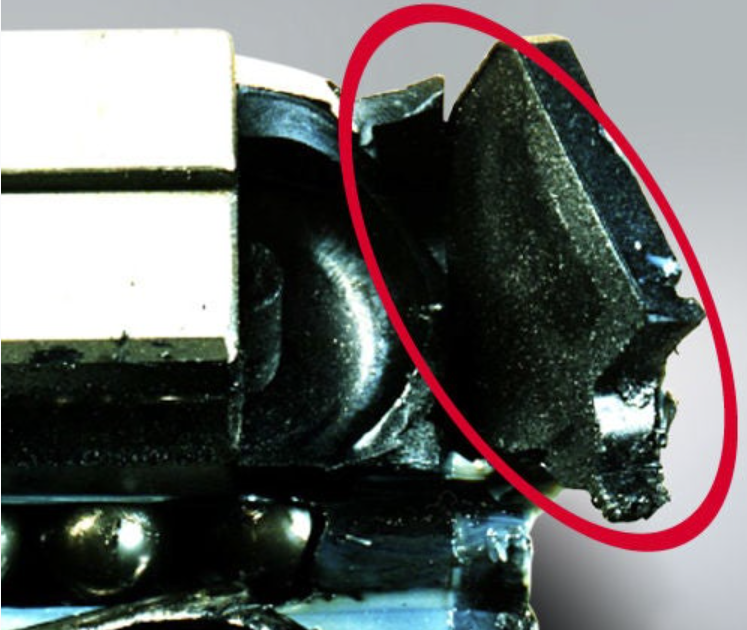
Poor lubrication and environmental pollution are the most primary causes of slide block damage. The internal rolling elements and raceways of linear guide blocks rely on lubricating grease to reduce friction and buffer operation pressure. Long-term lack of oil, deteriorated lubricant or uneven grease coating will lead to direct dry friction between metal parts, causing gradual wear, pitting and scratch on the contact surface. Meanwhile, harsh working environments with dust, metal chips, welding slag and industrial impurities will easily enter the interior of the slide block through damaged seals. These hard impurities will grind the rolling elements and raceways during reciprocating movement, forming irreversible abrasive damage and further leading to increased operating resistance and accuracy degradation.
Improper load and mechanical impact are key factors leading to structural deformation and failure. Many equipment failures stem from long-term overload operation, where the actual bearing load exceeds the rated load of the slide block. Eccentric load and uneven stress caused by unbalanced workpiece placement and improper equipment debugging will also produce additional torsion force on the slide block. This force will deform the slider structure, squeeze rolling elements and cause local fatigue damage. In addition, sudden mechanical impact, frequent start-stop vibration and long-term high-frequency operation will accelerate metal fatigue, resulting in cracks and loose internal components of the slide block.
Non-standard installation and poor daily maintenance also aggravate slide block damage. Deviated parallelism and flatness during installation, as well as inappropriate preload setting, will make the slide block bear abnormal resistance in operation. Long-term forced movement will cause unilateral wear and precision loss. Besides, humid and corrosive working environments will cause rust and corrosion on the slide block surface and internal parts, destroying the smoothness of the raceway and affecting normal operation. Irregular inspection and delayed replacement of worn parts will turn minor abrasion into severe structural damage.
Corresponding targeted solutions can effectively avoid and reduce slide block damage.
1. implement standardized lubrication management, replenish or replace professional lubricating grease regularly according to equipment operating frequency and temperature, and ensure uniform and full lubrication inside the slide block.
2. , strengthen environmental protection, install complete dust covers and sealing devices, and clean equipment surface impurities regularly to prevent pollutant infiltration.
Moreover, operate equipment strictly within the rated load range, avoid overload and eccentric operation, and balance workpiece placement to ensure uniform stress of the slide block. Standardize the installation process, calibrate installation flatness and parallelism accurately, and set reasonable preload to eliminate abnormal operating resistance. It is also necessary to keep the working environment dry and anti-corrosive, and conduct regular daily inspections to timely discover minor wear, abnormal noise and loose parts, realizing early maintenance and fault prevention. Scientific operation and maintenance can greatly reduce slide block damage and stabilize equipment operation accuracy.


